
In daily life, each costume carries a specific meaning and serves as an identity of an ethnic community. Among the costumes of the ethnic communities in Khanh Hoa Province, Cham people’s costume has existed and been preserved for more than a thousand years.
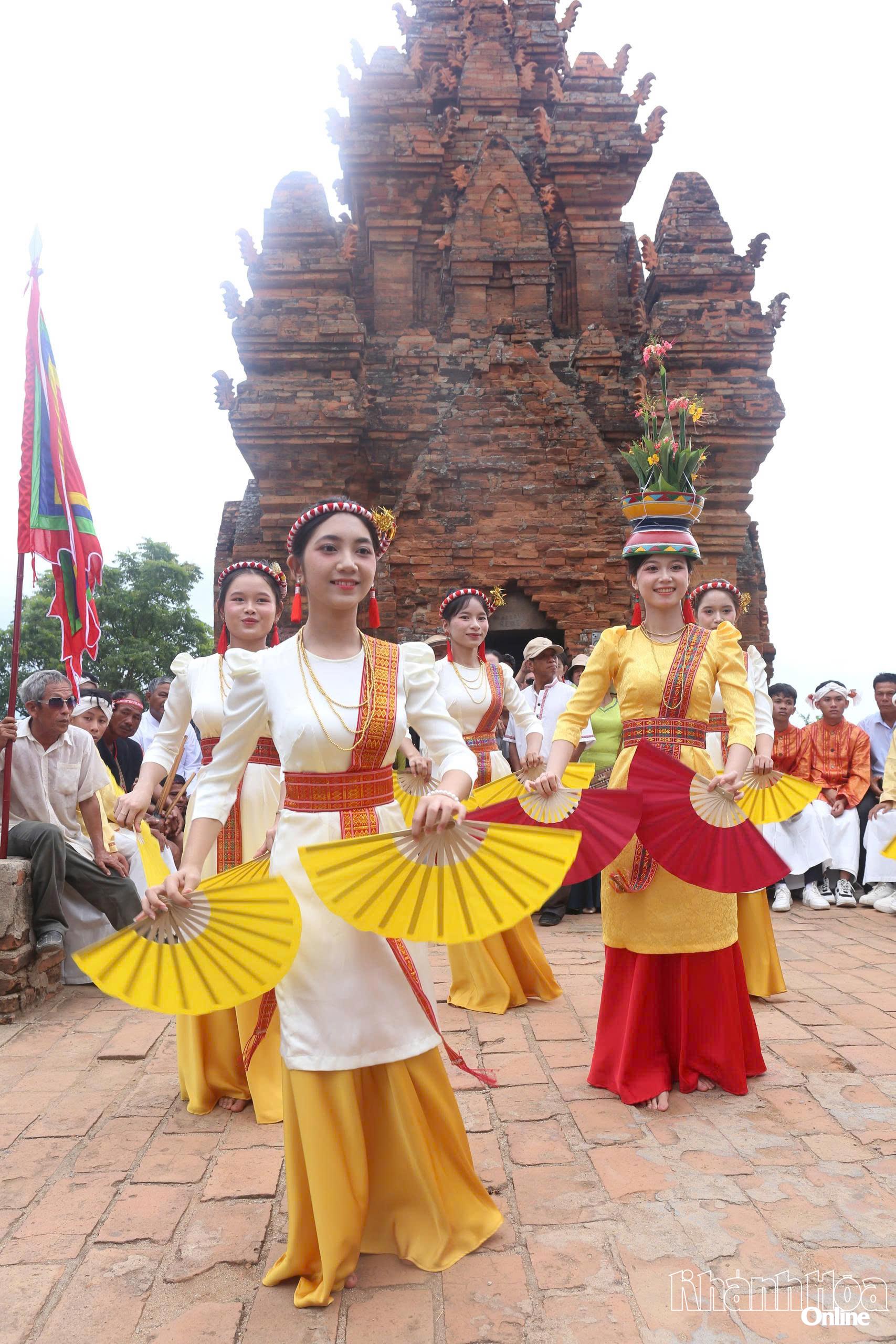 |
| Cham women in their traditional costume performing in Kate Festival 2025 |
More than a thousand years ago, Cham people knew how to grow cotton, spin yarn, weave fabric, and make clothing. On the altars and reliefs that remain today, images of royalty, priests, soldiers, and Apsara dancers with their distinct crowns, belts, and robes show that their weaving knowledge and fashion culture were established very early on. Clothing is not just for physical coverage; it reflects social hierarchy, power and spiritual beliefs. To this day, in Cham villages, the story of brocade weaving taught by the Mother of the Land, Po Inu Nagar, is still told as a legend of Cham people’s origin. A piece of fabric is more than just a product of labor; it is the connection of folk experience, aesthetic sense and life philosophies reflected through patterns in particular and the clothing in general.
Women’s seamless long dress or the headscarves are typical clothing of Cham traditional custome. However, behind these familiar images lies a strict system of regulations. Clothing is clearly distinguished based on the wearer and the occasion: for kings and deities, religious dignitaries, or commoners; between high-ranking and lower-level officials; for men and women; and for specific ceremonies. For example, the ordination of a Brahman deputy chief priest requires the specific aw rata attire; the Katip ordination features aw bhong; and young girls have unique attire for the Kareh (coming-of-age) ceremony in Bani Islam. Each item of the clothes carries its own meaning, serving as a "language" to identify the role and status of every individual within the community.
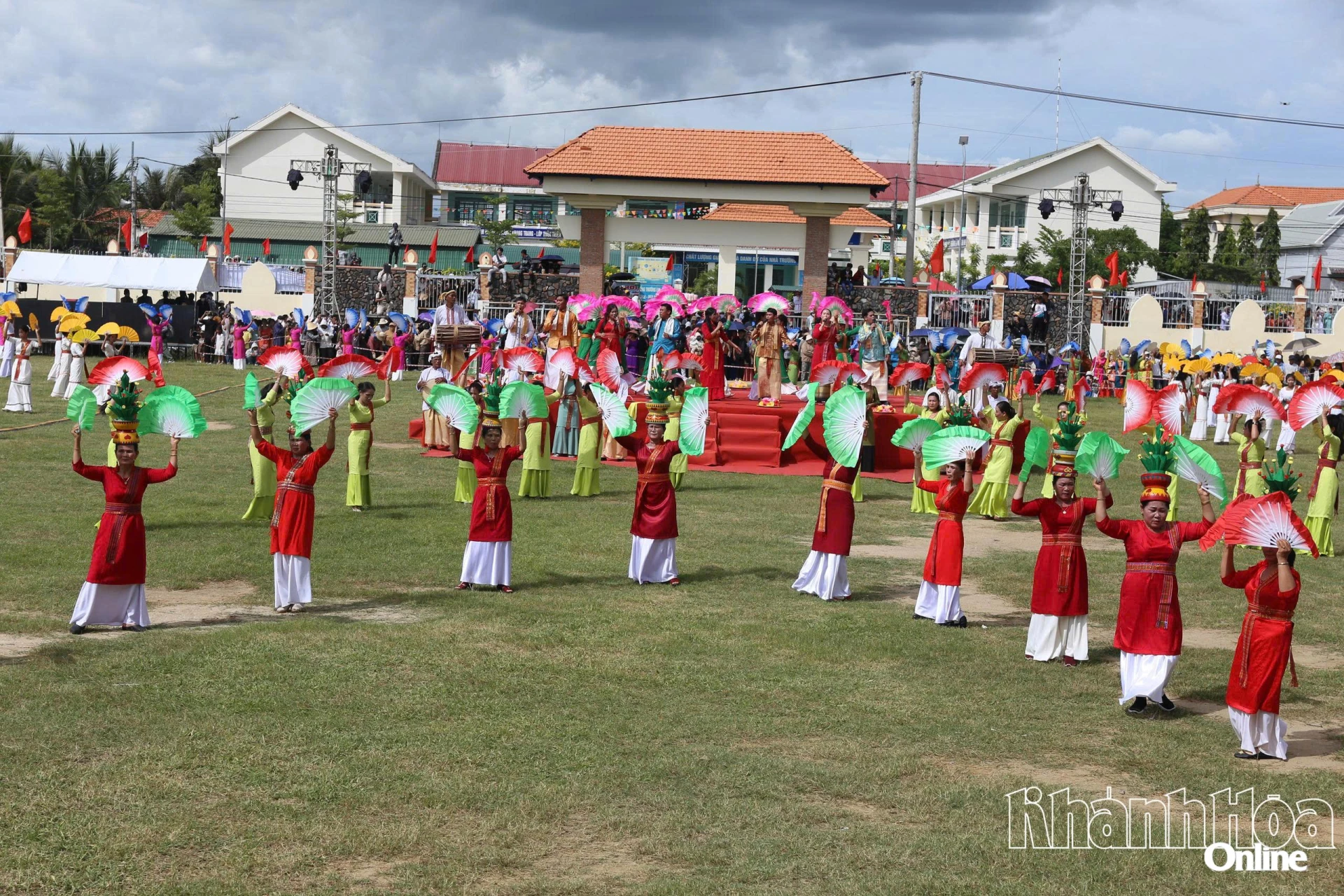 |
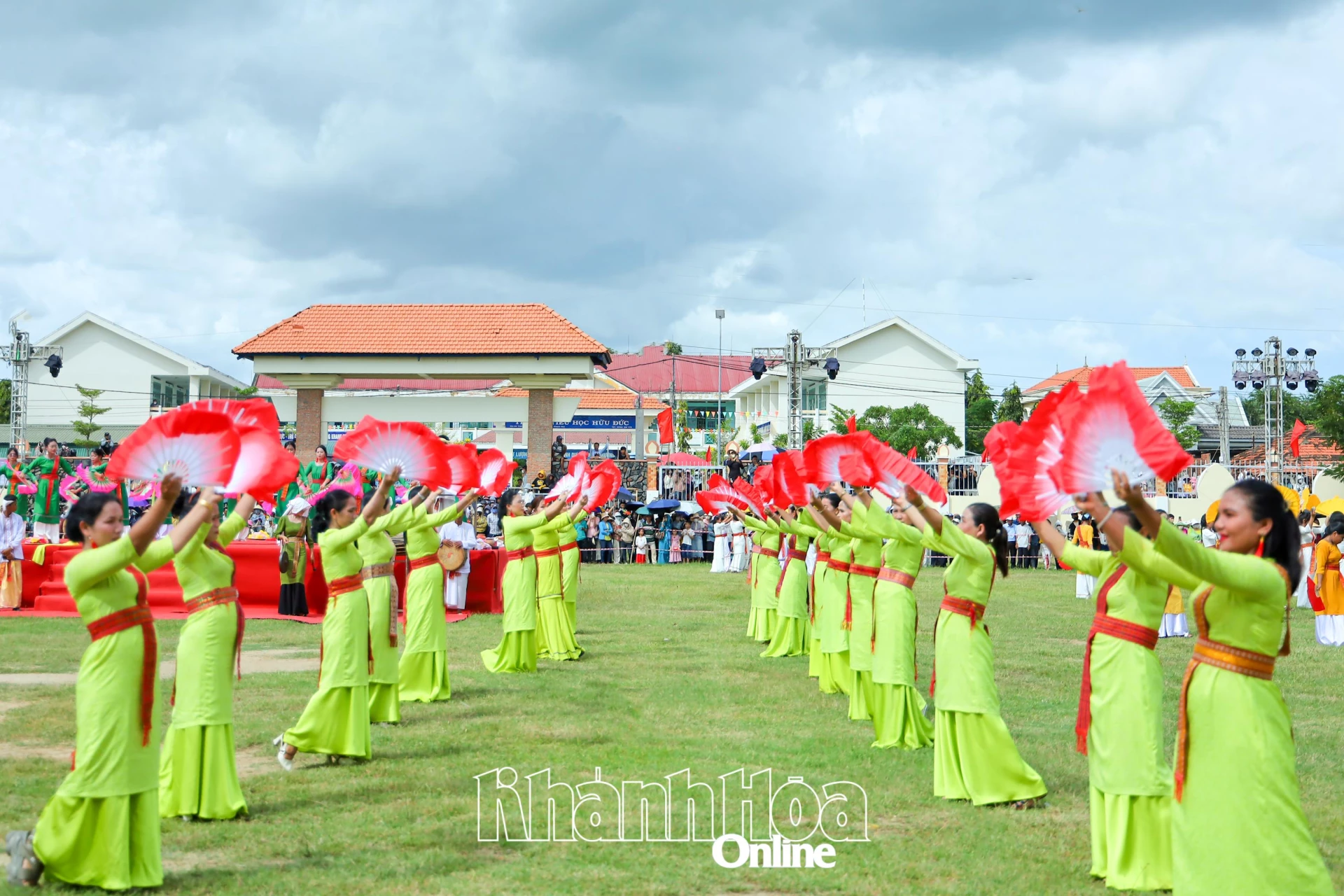
The weaving industry and traditional costume of Cham people are undergoing positive changes. Many types of attire used to reserve for dignitaries, such as Aw sah, akhan biyon, or bal jih, have now been adapted for common people to wear during festivals. Talei pabak shoulder strap and brocade patterns that were formerly exclusive to deities, royalty and ancestors are now used frequently in everyday wear. Ganrang crown is also being used more often by women during festive events. These changes show that the traditional costumes of Cham community are successfully adapting to modern life. As Vietnam is preparing the documents for Ao Dai heritage to submit to UNESCO, Cham traditional costume can contribute to the rich diversity of costume culture across the country.
In order to achieve this, the first step involves conducting a comprehensive inventory and research of the traditional costume and weaving craft of Cham people as well as coexisting ethnic groups with cultural overlaps such as the Raglai and the Churu. Based on these findings, a national intangible cultural heritage dossier should be developed for Cham costume and brocade weaving to affirm the cultural and historical value of the heritages. Additionally, the traditional costume should be used in daily life naturally through festivals, community events, tourism and media activities. Most importantly, craft villages should be preserved; artisans should be supported; the knowledge of weaving, tailoring, and wearing culture should be passed down to younger generations.
According to UNESCO and the 2003 Convention for the Safeguarding of the Intangible Cultural Heritage, the heartbeat of heritages lies in the recognition by the communities, groups, or individuals who create, maintain, and transmit them. Cham costume still endures today, from festivals to daily activities, carrying the memories and pride of the Cham community. Therefore, the goal is to create conditions for the heritage to spread, to be appreciated and respected correctly. In this way, Cham costume will not only be the pride of one community but also a shared cultural value to be preserved and promoted widely.
SON CA
Translated by H.N






Thông tin bạn đọc
Đóng Lưu thông tin